stud farms
Daily Gleaner, December 24, 1926
Some of the Old Time Studs
by S. C. "Mas' Sam" Burke
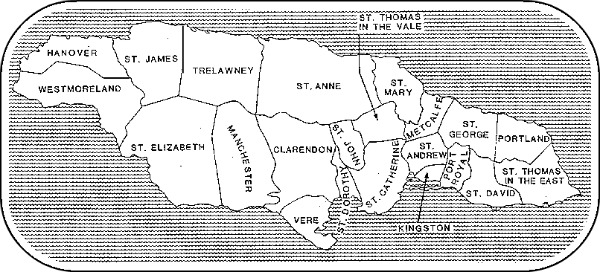
. . . . There was racing in Jamaica in the 18th century (before A.D. 1800) of sufficient importance to be recorded in the English Racing Calendar. There existed in Jamaica at the end of the 18th century several large breeding studs. At Sandy Gully in Clarendon there was evidently a large breeding establishment for I see by my records that between 1764 and 1797 no less than six stallions were imported to this Penn - Creme de Barbade, Bay Richmond, Caliban, Dorchester, Apothecary and Bay Fergus. About the same time Marlborough in Manchester must have had a very considerable stud for not only were the stallions Aaron, William and Ringdove, imported but the English mare Trip-lt whose female line survives to the present day, also came to this stud. Then on the northside of the Island there was a large stud at Agualta Vale in St. Mary, then owned by the Hibbert family. They imported Firetail, Lurcher, Kettcan, Polyanthus and the English mare Temperance foaled 1777 who raced in Jamaica (see English Racing Calendar) also the English mare Tarico by Eclipse foaled in 1785, the ancestress of Candlewood. In St. Ann there were breeding studs at Unity, belonging to John Blagrove (ancestor of that popular sportsman Capt. Peter Blagrove) who imported Microscope and Drumator and the mare Fandango. At Minard Mr. Archy Campbell had a stud and imported Gonzales foaled in 1780. John Taylor of Harmony Hill was also a prominent turfite and was one of the original subscribers to the English Racing Calendar. So was Benjamin Scott of Friendship. This last gentleman founded a large stud of horses in St. Ann, importing Storm, Brobdignog, Pepperpot and Wynham. Later his grandson Benjamin Scott Moncrleffe, carried on the stud and at his death in 1840 there were over 40 thoroughbred mares there including six Imported ones.
Another prominent owner and breeder of that period was Sir Charles Price, who owned many estates in Jamaica and had his breeding stud at Dornock in St. Ann. He imported the grey horse Viper who was the sire of the famous race horse Grey Viper of whom so many stories used to be told by the late John Wilson Davis. Sir Charles Price also imported Grey Diomed foaled in 1790 and raced him in Jamaica against Lurcher and Justice, both imported horses. Later on Sir Charles imported the 2,000 winner Olive who was extensively bred, from by St. Ann breeders.
The Pepper Stud in St. Elizabeth must have been started at the end of the 18th century (the first record that I can find of an importation there being Speculator foaled in 1794) but by the time it was dispensed in 1840 it was probably the largest thoroughbred breeding stud in the world, containing 100 brood mares and seven imported stallions. Goshen in St. Elizabeth must also have been an important breeding centre, for as far back as 1775 Tilbury Tom was imported there and later the Derby winner Hannibal came to this Penn. I think I have said enough to show that not only was there interest in racing in Jamaica before the fifties, but that in all probability there was more racing and certainly more breeding than at the present day.
As S C Burke showed, Jamaica was known from the 18th century for the quality of the racehorses bred here. Certain parishes became especially noted for their stud farms. An attempt will be made to give an account of some of the most notable of those farms.
St Andrew:
Retreat
St Ann:
Dornock
Friendship
Harmony Hill
Minard
Unity
St Mary:
Agualta Vale
Hanover:




